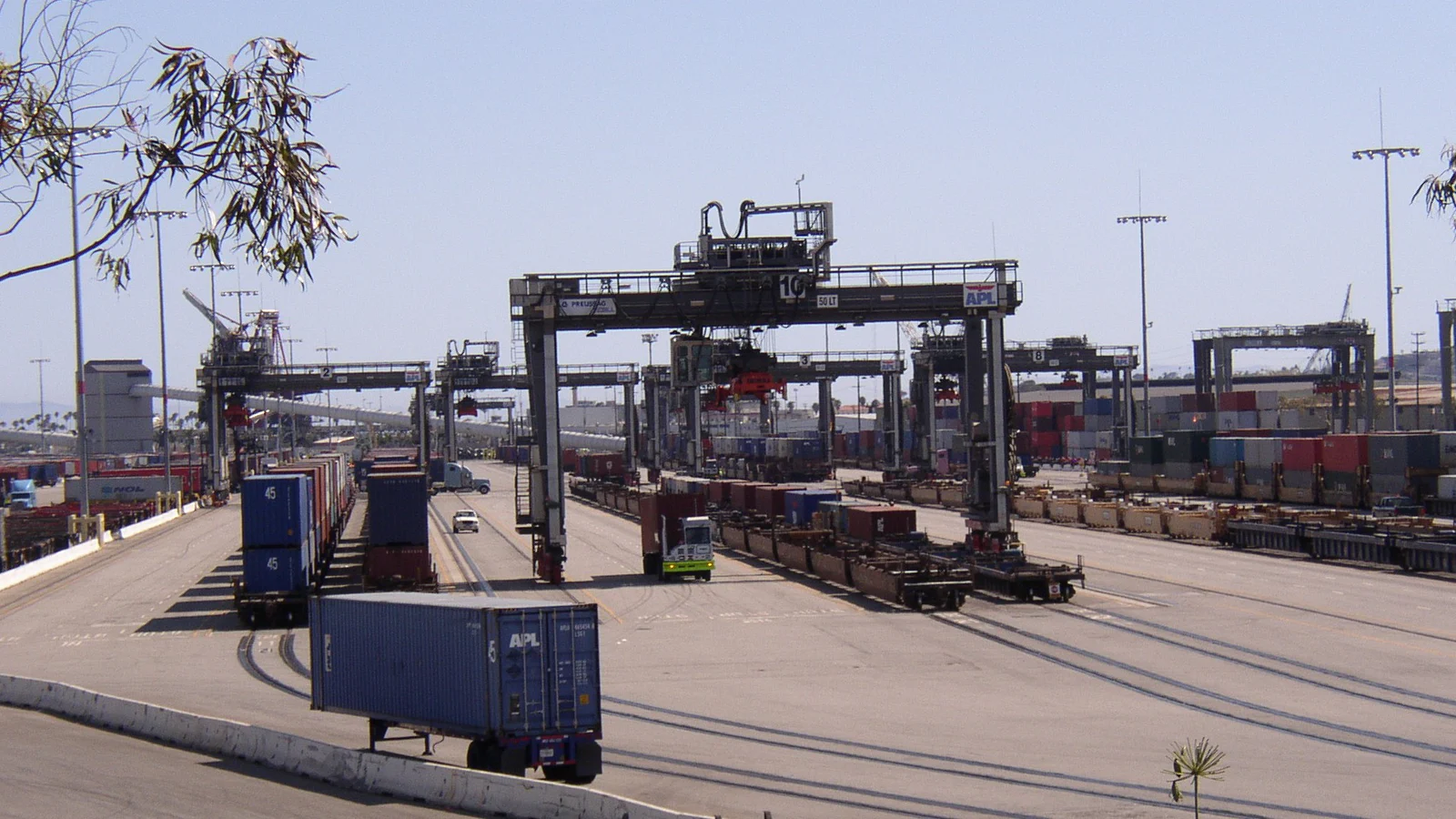
Image source: Intermodal ship-to-rail transfer.JPG - Wikimedia Commons contributor / Wikimedia Commons (CC BY-SA 3.0)

Regulatory relief is a supply-chain issue when the affected industries touch semiconductors, medical equipment, advanced manufacturing, and national defense. Rules that sound technical in Washington can decide whether critical production remains in the United States or moves somewhere cheaper, weaker, and less accountable.
The White House said on July 13 that President Trump signed a proclamation granting two years of relief from certain Biden-era EPA regulations for chemical manufacturers tied to semiconductor production, medical-device sterilization, advanced manufacturing, and defense systems. The administration argued those facilities needed time to keep operating under prior standards while avoiding costs it described as prohibitive.
That claim still deserves scrutiny. Environmental rules should not be dismissed simply because they impose costs. Clean air and clean water matter. But the conservative test should be practical: does a rule deliver measurable public benefit that justifies its burden, or does it make America more dependent on foreign supply chains while raising prices for families?
The same logic applies to customs enforcement. In June, the White House said a customs order directed DHS and CBP to tighten importer-of-record requirements, strengthen disclosure rules, increase enforcement against duty evasion, and publish transparency reports. That matters because domestic producers should not face one set of strict costs while foreign importers exploit weak enforcement.
Families feel these decisions downstream. A factory closure can become a shortage. A medical sterilization bottleneck can become a hospital problem. A supply-chain delay can become higher prices. A loophole for foreign importers can become lost work for American producers who followed the rules.
The right debate is not regulation versus no regulation. It is regulation that protects the public without hollowing out the country. If Washington wants resilient supply chains, it has to stop treating compliance costs, trade enforcement, energy reliability, and family affordability as separate issues that voters somehow never connect.
This article is labeled as opinion. AI assistance status: used in drafting. Publication requires human editorial review.