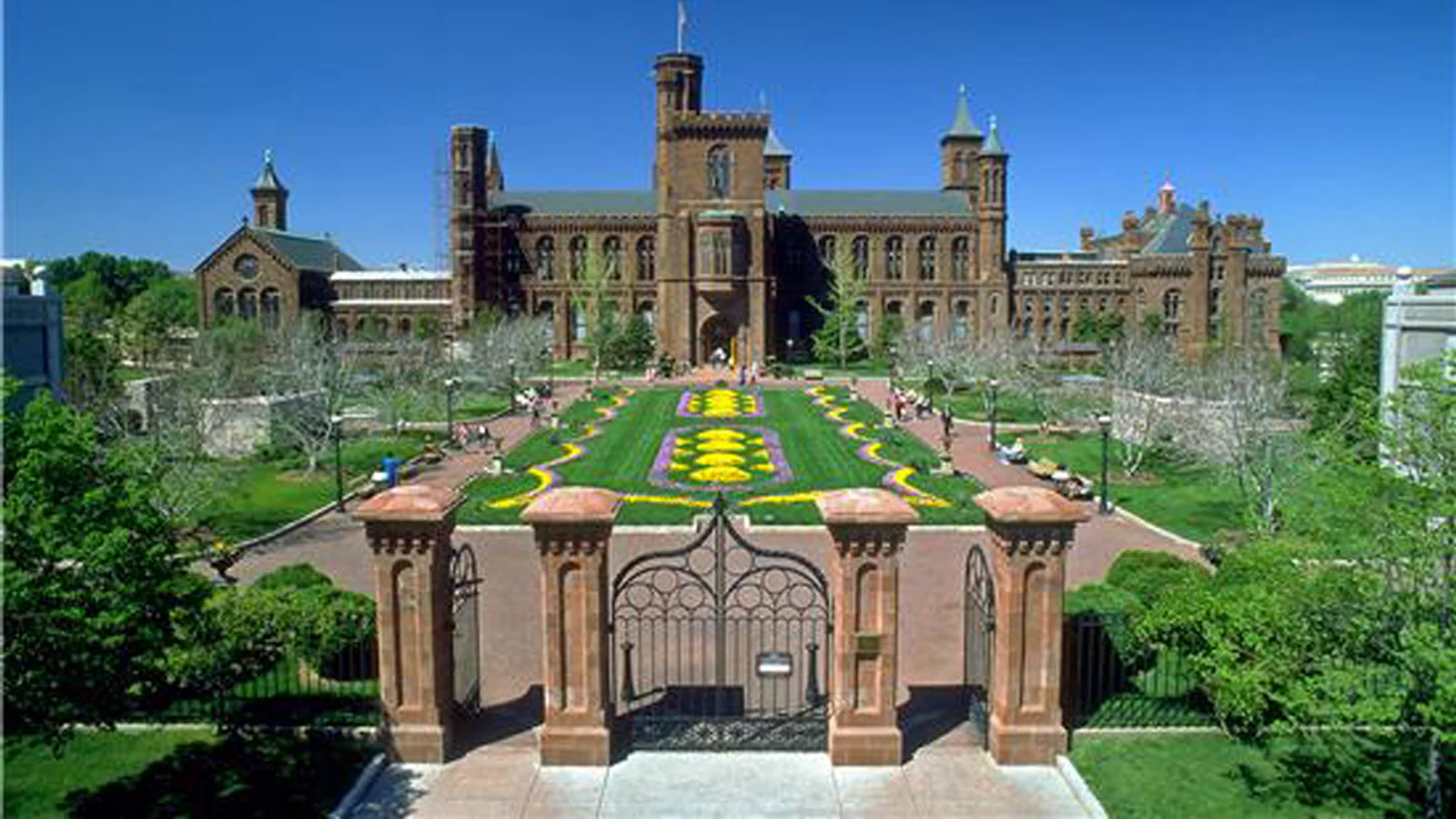
Image source: The Smithsonian Institution Building.jpg - Jeff Tinsley / Smithsonian Institution via Wikimedia Commons (Public domain)

Explore This Story
The White House's July 24 fact sheet on the Smithsonian is not merely a museum story. It is a fight over who gets to define the American inheritance inside institutions funded, trusted, and visited by the public. President Trump's administration says it is restoring trust by requiring new public signage and transparency where exhibits present contested accounts of American history, especially when those accounts portray the country through a consistently negative lens.
That debate fits a larger conservative concern: public institutions have too often treated patriotism as embarrassing, faith as primitive, the Founding as little more than hypocrisy, and American achievement as a footnote to grievance. A serious museum should not hide America's failures. Slavery, segregation, war, corruption, and injustice belong in the record. But the record is also incomplete if it leaves out constitutional self-correction, religious liberty, scientific achievement, military sacrifice, entrepreneurship, abolition, civil rights, and the millions of ordinary citizens who built families and communities under the protection of a free republic.
The White House fact sheet says the administration wants signs outside affected museums to alert visitors when exhibits do not present a balanced picture. Critics will call that political interference. Conservatives should answer with a practical question: when federal institutions receive public support and claim civic authority, why should voters have no say when those institutions drift into ideological instruction Curators deserve professional independence, but professional independence is not immunity from public accountability.
This is especially important because museums educate children. Families travel to Washington, walk through the Smithsonian, and expect a serious civic experience. They are not asking for propaganda. They are asking for fairness. A museum can describe the brutality of slavery while also explaining the constitutional principles later used to defeat it. It can examine discrimination while also honoring the Americans who fought and died to expand liberty. It can critique leaders without teaching that the country itself is irredeemable.
The conservative standard should be accuracy, context, and gratitude. Accuracy means uncomfortable facts remain visible. Context means those facts are placed inside the broader sweep of American history, not selected to prove a predetermined indictment. Gratitude means remembering that a free society with constitutional checks, local institutions, property rights, ordered liberty, and religious freedom is rare in world history and worth preserving.
The Smithsonian is not a random activist nonprofit. It is one of the most visible cultural institutions in the country. Its museums shape how citizens and foreign visitors understand the United States. If the story told there suggests that America is chiefly a tale of oppression, then the public has a right to ask why federally backed institutions are flattening the nation's record. The answer cannot be that taxpayers should fund the exhibit and keep quiet.
There is a risk, of course, that any administration could overcorrect. Conservatives should not demand sanitized history or partisan hero worship. That would be a mistake. The best case for reform is not that every exhibit should cheerlead. It is that exhibits should tell the truth with proportion. The Founders were imperfect men who created a framework that allowed later generations to appeal to liberty against injustice. That tension is not a weakness in the American story; it is one reason the story matters.
This debate also speaks to the civic confidence problem. Young Americans are often told that their country is defined by its sins and that loyalty is suspect. A republic cannot survive if its institutions train citizens to despise their inheritance. Nor can it survive if it refuses to confront failure. The right approach is mature patriotism: love of country strong enough to admit wrongs and serious enough to defend what is good.
The White House move will likely face criticism from academics, museum officials, and media outlets that see any conservative pressure as censorship. But voters should separate censorship from transparency. A public sign saying an exhibit presents a disputed or incomplete framing does not burn books. It invites scrutiny. If curators believe their work is balanced, they can defend it. If they cannot, taxpayers deserve to know.
The larger point is that culture is downstream from institutions. Schools, museums, media organizations, courts, churches, and civic associations all shape what a people believes about itself. Conservatives ignored those institutions for too long, then wondered why so many became hostile to conservative assumptions. The Smithsonian fight is a reminder that cultural stewardship is not optional. America's story belongs to the public, not only to the credentialed class that happens to manage the display cases.
A practical reform agenda should therefore ask for exhibit transparency, source notes, viewpoint diversity among reviewers, and clear separation between documented fact and curatorial interpretation. That does not turn museums into campaign offices. It asks them to act like public trusts. If the Smithsonian can meet that standard, it can strengthen civic confidence instead of deepening the suspicion that elite institutions speak only to themselves.
This article is labeled as opinion. AI assistance status: used in drafting. Publication requires human editorial review.