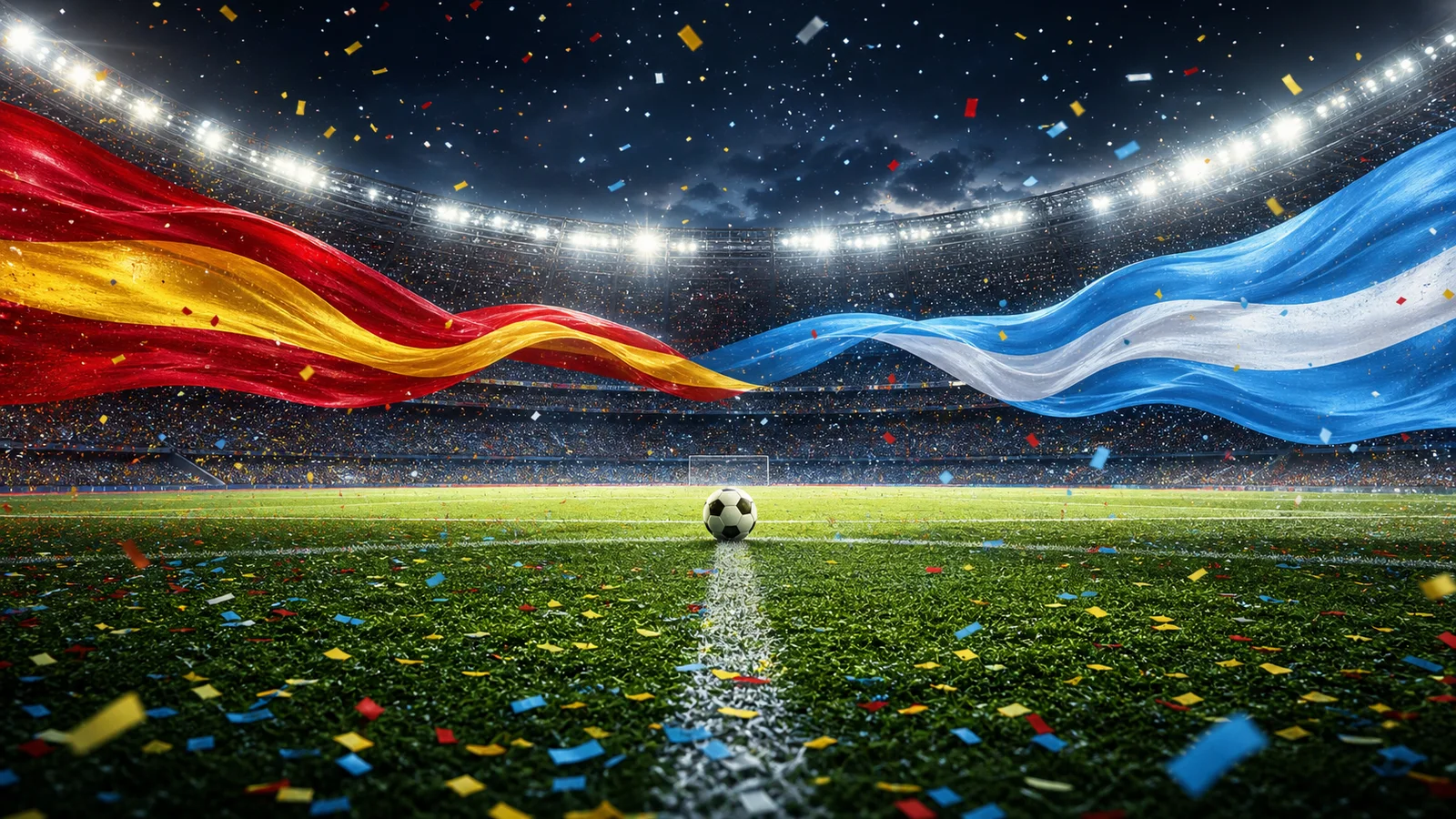
Spain turned the 2026 World Cup final into a test of patience, nerve and late-game discipline, then finally broke Argentina in extra time. Ferran Torres scored in the 106th minute Sunday in East Rutherford, New Jersey, giving Spain a 1-0 win over the defending champions and delivering the country's second World Cup title. It was not a loose, open final from the first whistle. It was a match that tightened by the minute, with Argentina trying to survive pressure and Spain slowly proving that possession without panic can still be ruthless.
The winner came from the kind of sequence that usually defines a champion: several calm decisions in a row, followed by one clean finish. AP reported that Argentina goalkeeper Emiliano Martinez had held Spain off through 105 minutes and that Spain had put 11 shots on net before Torres eventually found the breakthrough. The buildup ran through Pau Cubarsi, Marc Cucurella, Eric Garcia, Martin Zubimendi, Lamine Yamal and Pedro Porro before substitute Nico Williams headed Porro's cross back into Torres' path. Torres, arriving at the moment Spain had waited all night to create, drove the ball past Martinez and sent the Spanish bench into a sprint.
That goal was also a reminder of how Spain had reshaped the match over time. Argentina had entered the night with championship experience, Lionel Messi's gravitational pull and Martinez's penalty-box confidence. Spain answered with width, circulation and a younger core that did not look overwhelmed by the occasion. Yamal stretched attention, Williams gave Spain another change of pace off the bench, and the midfield kept pulling Argentina into repeated defensive choices. For long stretches, Argentina avoided collapse. What it could not do was make Spain uncomfortable enough to abandon the plan.
Argentina's most damaging moment before the goal was not a missed chance. It was the red card. Enzo Fernandez was sent off in regulation stoppage time after receiving a second yellow card, leaving Argentina to defend extra time with 10 men. In a final already being played on fine margins, that changed the entire physical math. Argentina still had pride, structure and Martinez behind it, but every recovery run became longer. Every clearance invited another Spanish reset. Every counterattack required one more perfect touch from a team running out of legs.
The officiating flashpoint came early in extra time, when Spain briefly appeared to have found a breakthrough before the winner. A goal was disallowed after the referee ruled that Mikel Merino had stepped on Nicolas Otamendi before Nico Williams put the ball in. That decision could have rattled Spain, especially in a final against a champion known for surviving chaos. Instead, Spain kept playing as if the chance would come again. That was the difference between pressure and maturity.
The pregame storyline leaned heavily on Messi and Argentina's repeat bid. Argentina had survived a wild road to the final, including a semifinal comeback against England, and Messi had pushed back against critics who argued the champions had benefited from calls or tournament fortune. The final did not settle every argument about Argentina's run, but it did answer the biggest question on the field. Spain were the cleaner, fresher side when the match demanded one more stretch of control.
Predictions before kickoff split between sentiment and form. The sentimental case belonged to Messi and Argentina: one last run, one last final, one last chance to close the circle with back-to-back World Cups. The form case belonged increasingly to Spain, whose blend of young attackers, disciplined possession and late-match energy made them look like the tournament's most expandable team. By the 106th minute, the form case had won. Spain did not need a blowout to make the point. It needed only one sequence that Argentina could no longer answer.
The final whistle did not end the drama cleanly. AP reported that Spain's celebrations were marred by brief scuffles, including an incident in which Leandro Paredes appeared to shove Eric Garcia by the throat before pushing Gavi to the ground. Other players and Argentina coach Lionel Scaloni moved in to calm the scene, while any possible FIFA discipline remained unclear. It was an ugly postscript to a final already thick with frustration, exhaustion and the knowledge that Argentina's title defense had ended in the most painful way possible: late, narrow and after playing short-handed.
There will be tactical debates about Argentina's substitutions, its ability to protect Messi from isolation, and whether Spain should have finished the match earlier. There will also be debate about discipline. Fernandez's second yellow did not single-handedly decide the final, but it bent the final toward Spain. Paredes' postgame conduct, if reviewed further, could become another after-the-fact stain on a team that fought until the end but did not always control the temperature around it.
For Messi, the image was harsher than the box score. At 39, this was widely treated as his final World Cup stage. He leaves it as a champion from 2022, a finalist in 2026, and the defining player of Argentina's modern era. He did not get the farewell ending Argentina wanted, but he did not need this trophy to validate the career. The lasting picture is larger: Messi brought Argentina back to the summit, carried the shirt through another final run, and forced the next generation to measure greatness against a standard few players will ever approach.
Spain leaves with the trophy and with something more useful than a single-night celebration. It leaves with evidence that its next core is ready now. The 2026 final may be remembered as Torres' goal, Argentina's red card and Messi's last walk off the World Cup stage. It may also be remembered as the night Spain announced that its future had arrived ahead of schedule.
This article is labeled as news. AI assistance status: used in drafting. Publication requires human editorial review.