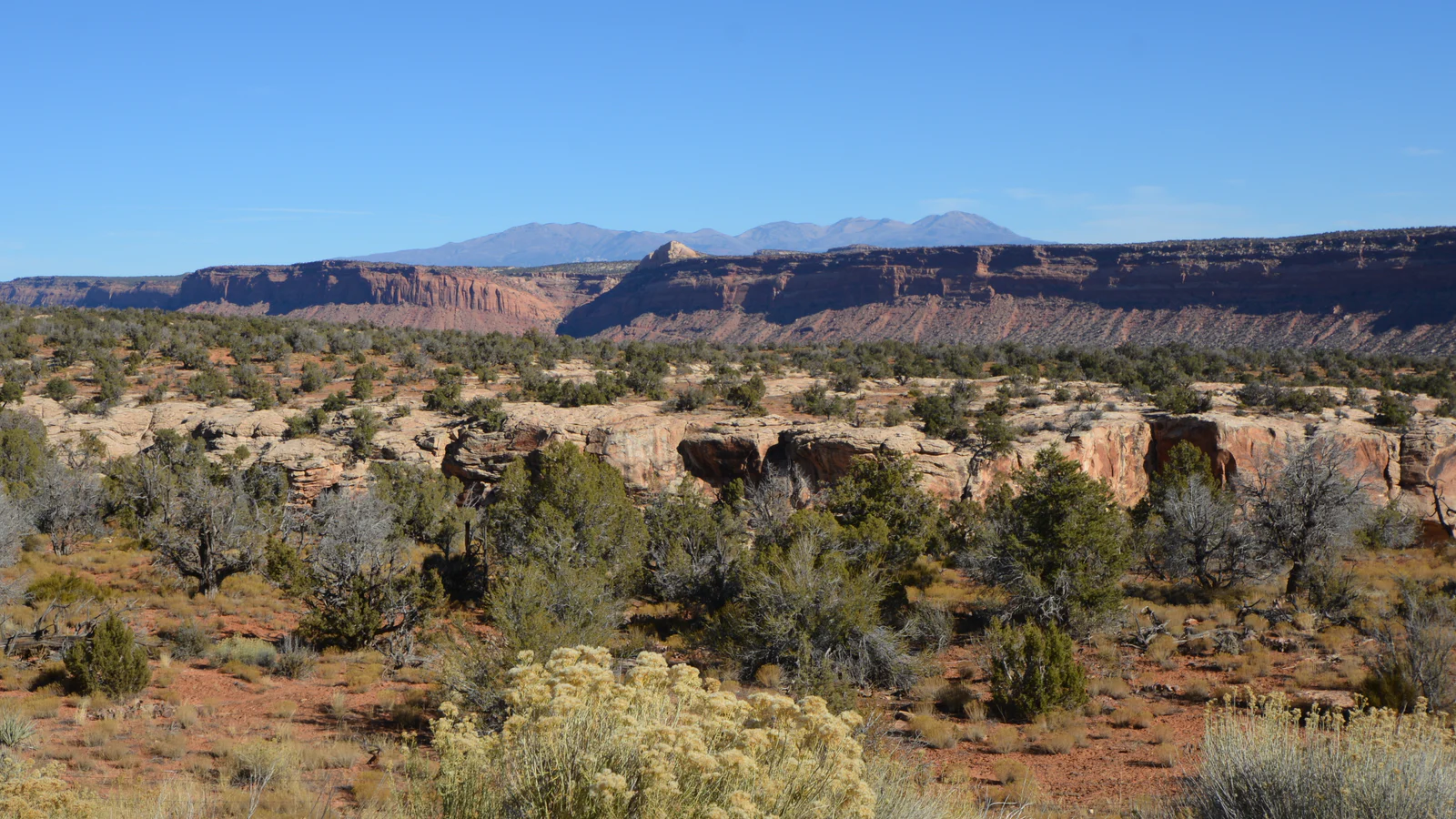
Image source: Bears Ears National Monument Landscape (53346803016).jpg - BLMUtah / Wikimedia Commons (Public domain)
.jpg)
Explore This Story
President Trump's decision to modify Bears Ears and Grand Staircase-Escalante reopens one of the oldest fights in Western politics: whether the federal government should lock up vast landscapes from Washington or manage land in a way that allows conservation, access, local work, recreation, grazing, energy, hunting, fishing, and infrastructure to coexist. The White House says the July 13 proclamations reduce the Utah monuments to sizes it considers appropriate under the Antiquities Act while continuing protection for specific historic and scientific objects.
According to the administration, Grand Staircase-Escalante is reduced from about 1.87 million acres to roughly 181,500 acres, and Bears Ears from about 1.36 million acres to roughly 121,100 acres. Those numbers are politically explosive because monument boundaries determine who may use land and for what purposes. They also determine whether local communities see the federal government as a steward or a distant landlord.
The White House argues that the Antiquities Act has been stretched beyond its intended meaning. The law allows presidents to protect objects of historic or scientific interest and reserve the smallest area compatible with their care and management. The administration says the term has been stretched to include broad landscape concepts such as biodiversity, viewsheds, and remoteness. Conservatives have long argued that this approach turns a narrow preservation authority into a tool for sweeping land-use restriction without Congress.
Supporters of large monument designations argue that big landscapes require big protections. They point to cultural sites, recreation, wildlife, scenic value, and long-term conservation. Those concerns should not be dismissed. Utah's public lands contain archaeological resources, tribal history, fragile landscapes, and world-class scenery. The question is not whether those things matter. The question is whether federal restrictions should cover millions of acres when the administration says many protected objects are already covered by other laws or do not require such expansive boundaries.
The conservative answer is multiple-use management. That does not mean strip-mining every canyon or ignoring cultural resources. It means land policy should allow different legitimate uses when those uses can be managed responsibly. Rural communities depend on access. Ranchers, outfitters, energy workers, hunters, anglers, county officials, road crews, and recreation businesses all have a stake. A land policy written mainly for national environmental groups can impose costs on people who actually live near the land.
The White House says rightsizing the monuments will restore access and allow traditional multiple-use activities such as grazing, timber harvest, fishing, hunting, resource development, infrastructure upgrades, and motorized recreation. That list explains why the issue resonates in the West. It is not only about ideology. It is about whether communities can maintain roads, earn a living, manage fire risk, move livestock, explore resources, and enjoy public land without endless federal restriction.
There is also an energy dimension. The fact sheet connects the action to Trump's broader order to unleash American energy and streamline permitting. Conservatives see that as a strength. Energy affordability affects families, farmers, manufacturers, and national security. If federal land policy blocks domestic resources while Americans rely on foreign supply chains, the public deserves a serious debate about costs. Environmental groups may disagree, but they should not be allowed to treat every development question as morally closed before local voices are heard.
The administration should still proceed carefully. Monument boundaries are not just lines on a map. They touch tribal interests, archaeological resources, tourism, grazing rights, mineral claims, roads, and federal-state relations. If protections remain for specific landmarks and objects, the public should be able to see clear maps, enforcement plans, consultation records, and management rules. A conservative land policy should be more accountable than the one it criticizes.
This fight is likely to reach courts and headlines. Opponents will frame it as an attack on conservation. Supporters will frame it as a correction to executive overreach. The public should ask a simpler question: who is best positioned to balance preservation with productive use, and what authority did the president actually receive from Congress The Antiquities Act was not written as a permanent substitute for legislative land management.
The Utah rollback reflects a broader conservative belief that Washington has often treated Western land as a national museum and Western residents as caretakers without voting power. Conservation is a real value. So are work, access, local government, recreation, and energy security. If Trump's proclamations protect true historic and scientific objects while restoring practical land use around them, they will represent a long-overdue correction in favor of the people who know the land best.
The administration should make that case in human terms. A boundary change affects county budgets, school funding, emergency access, ranching routes, outfitting businesses, tribal consultation, and energy projects. The best argument for reform is not abstract hostility to conservation. It is the insistence that conservation must live alongside the people and economies that make rural America viable.
This article is labeled as opinion. AI assistance status: used in drafting. Publication requires human editorial review.