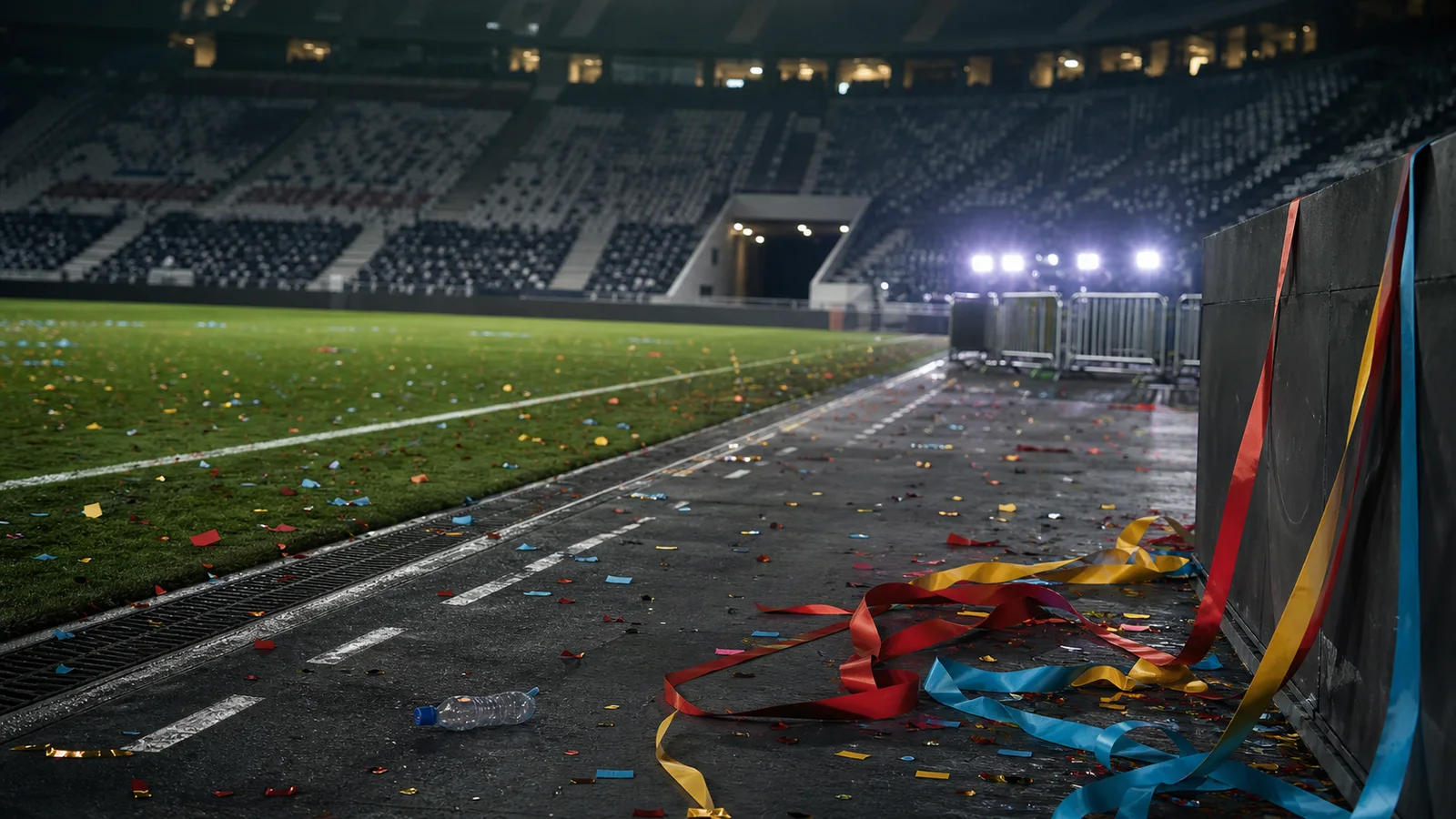
The World Cup final ended with Spain lifting the trophy, but the scenes after the whistle gave the tournament one more controversy to sort through. AP reported that Spain's celebrations after the 1-0 win over Argentina were marred by brief scuffles, including an incident in which Leandro Paredes appeared to shove Eric Garcia by the throat before pushing Gavi to the ground.
Any disciplinary review would start with the basic question of what happened after play ended. Post-whistle incidents are different from ordinary fouls because the match no longer requires physical contact. Officials and governing bodies generally care about whether players escalated a confrontation, placed hands near an opponent's head or neck, ignored attempts to separate, or created safety issues during the ceremony period.
The reported Paredes-Garcia-Gavi sequence is the obvious focus because AP described specific contact and named the players involved. The article also reported that Argentina coach Lionel Scaloni and other players moved in to calm the scene. That context matters. A review would likely distinguish between players who escalated the confrontation and players or staff who helped stop it.
The match itself had already created a discipline storyline. Enzo Fernandez was sent off in regulation stoppage time after a second yellow card, leaving Argentina to play extra time with 10 men. Ferran Torres scored the winner in the 106th minute, after Spain had kept up enough pressure to break through. By the time the final whistle arrived, Argentina were carrying the emotional load of a lost title defense, a late red card and Messi's likely final World Cup appearance.
None of that excuses postgame contact. It explains the temperature around it. Finals produce exhaustion, disappointment and a sense that every call, missed chance and confrontation will be replayed forever. Players who normally step away can react badly when the trophy ceremony begins a few yards from their own heartbreak. That is exactly why governing bodies cannot treat the final whistle as the end of responsibility.
For Spain, the priority is keeping the story centered on the title. The last thing a winning team wants is for celebration footage to become a debate over retaliation or provocation. For Argentina, the priority is preventing an already painful loss from turning into suspensions, fines or an uglier final chapter for a group that had just reached another World Cup final.
The public should also be careful about claiming more than the available reporting supports. AP said any possible FIFA discipline remained unclear. That means the responsible frame is not to declare punishments in advance, but to identify what officials could examine: video angles, referee reports, player conduct after the whistle, whether contact was forceful or avoidable, and whether any staff entered the confrontation improperly.
The soccer story will remain Spain's trophy and Torres' extra-time goal. The aftermath story is narrower but still important. A World Cup final is supposed to end with a champion, not a melee. If FIFA reviews the scuffles, the question should be simple: who escalated, who separated, and what standard does the sport want after its biggest match?
This article is labeled as news. AI assistance status: used in drafting. Publication requires human editorial review.